When I booked the Manaslu Circuit, the mandatory guide requirement frustrated me. I am someone who values solo travel precisely for the freedom and self-reliance it offers. A required guide felt like a rule designed to extract money rather than serve any real purpose.
I was wrong about that. Here is what actually happened.
The Regulation and the Reality
Nepal requires all trekkers on the Manaslu Circuit to be accompanied by a licensed guide. This is not just a fee — it is a genuine restriction tied to the area's status as a restricted conservation zone. Independent trekking is not permitted.
My guide's name was Pemba. He had grown up in a village two days' walk from the trail and had been guiding in the Manaslu region for eleven years. Within the first hour of walking together, I stopped thinking of him as a requirement and started thinking of him as the most valuable part of the trip.
What a Good Guide Actually Gives You
- Navigation in the upper sections. Above Samagaon, the trail becomes genuinely ambiguous. Snowfall covers markers. A wrong turn is not just inconvenient — it is dangerous near the glacier.
- Cultural translation. Pemba explained monastery etiquette, introduced me to tea house owners by name, and told me the history of villages I would have just walked through.
- Medical awareness. On day eleven, I had a mild headache and was pushing to continue. Pemba told me we were staying. He was right.
- Local knowledge that no guidebook has. Which tea house had the best food that week. Which family had recently had a baby and would welcome congratulations. Where the blue sheep had been grazing that morning.
The Solo Trekker Social World
Here is what surprised me most: trekking alone (with a guide) on the Manaslu Circuit is remarkably social.
The trail has a natural rhythm. Most trekkers follow similar itineraries. By day three, I was eating dinner with the same rotating group of people — a Dutch couple, a Korean photographer, two Australians, and a retired teacher from Canada. We leapfrogged each other for two weeks.
Tea houses are essentially communal living. The dining room is shared. You sit around the same table. You talk about where you came from, what you saw that day, what your legs feel like. It is the best kind of community — temporary, honest, and built entirely around shared experience.
The Genuine Solitude
And then there were the hours on trail between tea houses when I walked ahead or fell behind the group, and it was just me and Pemba and the mountains.
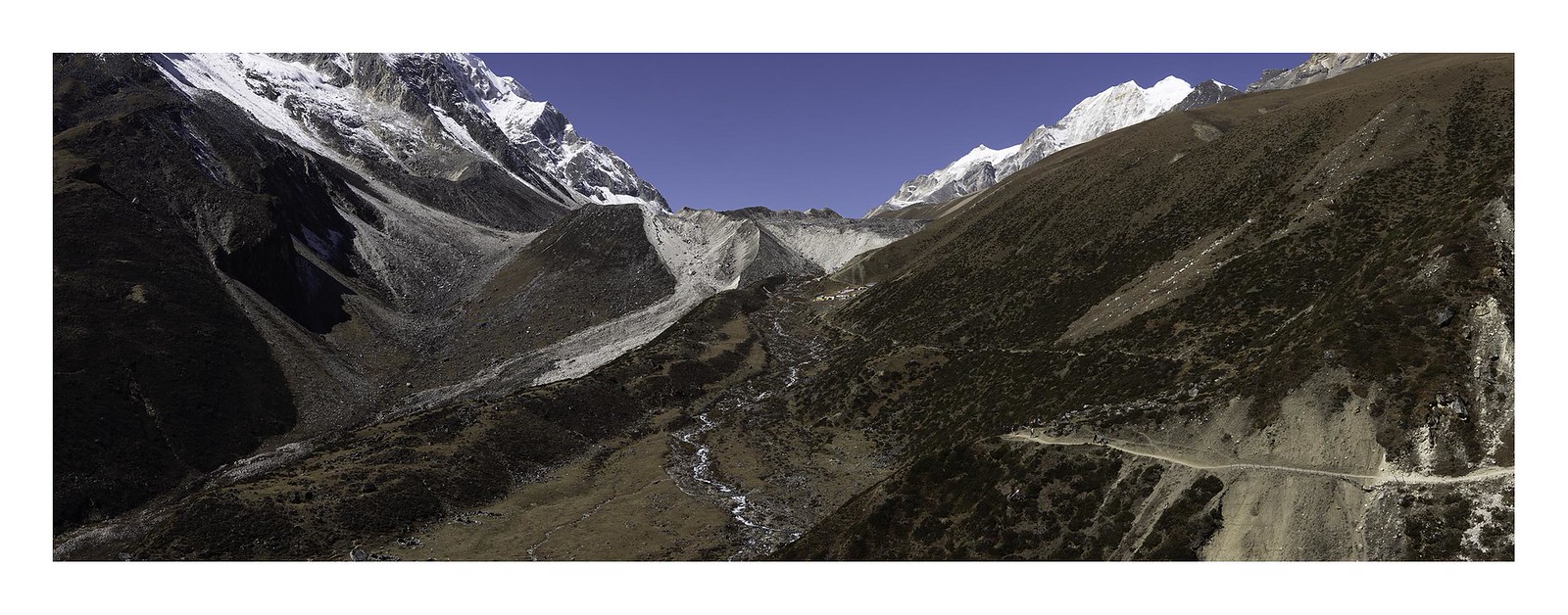
Those hours were what I had come for. The upper Manaslu valley above Samagaon has a quality of silence that is hard to describe — not empty, but full. Wind across the high meadows. A pika darting between rocks. Distant prayer flags at a ridge line. The enormous white bulk of Manaslu filling the sky ahead.
What I Learned About "Solo" Travel
Solo travel was never really about being alone. It was about being free to choose my pace, my stops, my direction of attention. The guide system on the Manaslu Circuit does not take that away — it just routes that freedom through someone who knows the land far better than you do.
I spent two weeks in one of the most remote trekking regions in Nepal. I had genuine solitude when I wanted it, genuine community when I needed it, and a guide who turned out to be one of the most knowledgeable and quietly funny people I have ever met.
The mandatory guide rule is not a restriction. It is an introduction.