When someone asks "how hard is the Manaslu Circuit Trek?" the honest answer is: it depends on which factor you are asking about. The difficulty is not a single thing. It is the sum of many compounding factors. This breakdown covers every one of them.
Altitude: The Invisible Challenge
Altitude is the factor that catches most trekkers off guard. You cannot train yourself immune to it. Even elite athletes get altitude sickness.
The Manaslu Circuit starts around 600m and finishes at Larke Pass at 5,160m. That is a massive range. Here is how altitude affects your body at different stages:
| Elevation | Effect | |---|---| | Up to 2,500m | Minimal — most people feel fine | | 2,500–3,500m | Mild symptoms possible: fatigue, headache | | 3,500–4,500m | Significant AMS risk, acclimatization critical | | 4,500m+ | Serious risk zone, monitor closely | | 5,160m (Larke Pass) | Peak exertion at reduced oxygen (~50% of sea level) |
Why Altitude Multiplies Difficulty
Everything is harder at altitude. Your heart rate elevates doing tasks that feel trivial at sea level. Sleep is disrupted. Appetite drops. Digestion slows. Healing takes longer. A blister that would be minor at 1,000m becomes a significant issue at 4,500m because your body is already under stress.
Daily Physical Demands
The Manaslu Circuit is not one hard day. It is 14 to 18 hard days in a row.
- Walking time: 5 to 9 hours daily
- Distance: 7 to 18 km per day
- Elevation change per day: Can be 500–1,500m of ascent
- Terrain: Constantly varied — jungle, stone steps, river paths, rocky ridgelines, moraine
The cumulative fatigue is significant. By day 10, your legs carry the weight of everything that came before. This is why base fitness matters so much — you need reserves, not just enough to get through one day.
Terrain Complexity
Lower Trail (Days 1–4)
The Budhi Gandaki river valley is lush, steep, and hot. You cross dozens of suspension bridges. The trail is often narrow, wet, and requires attention. It is tiring but not technically demanding.
Middle Section (Days 5–10)
The trail opens into wider valleys but the elevation gain becomes serious. Stone-paved paths through ancient villages. Stretches of loose rocky trail. River crossings on basic bridges.
High Alpine Section (Days 11–14)
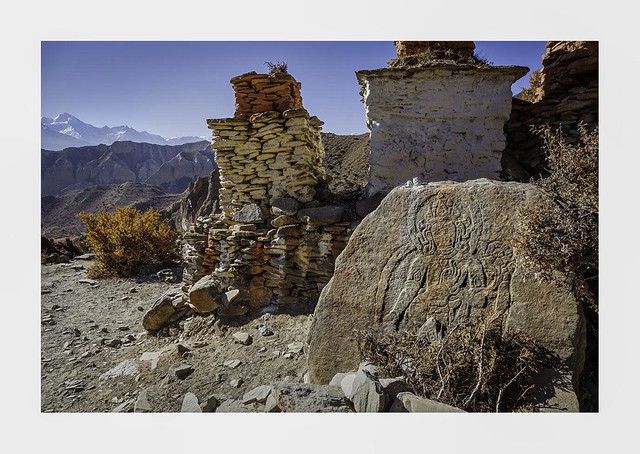
Above treeline, the landscape is stark and dramatic. The trail crosses glacial moraine — loose, shifting rock that demands focus on every step. The risk of twisted ankles increases here.
Larke Pass Crossing
The hardest single day. Starts before dawn. Cold, potentially icy, steep ascent followed by an equally demanding descent. Full details:
- Start time: 3:00–3:30 AM
- Elevation at pass: 5,160m
- Total time: 8–10 hours
- Challenges: Darkness, cold, altitude, steep rocky descent, possible snow
Remoteness: A Difficulty Multiplier
Remoteness does not make the hiking physically harder, but it fundamentally changes the risk profile.
After Jagat (around day 3-4), there is no road access until you cross Larke Pass. If you are injured or seriously ill, your options are:
- Walk out (often impossible if the problem is serious)
- Helicopter evacuation ($3,000–$8,000 without insurance)
- Wait for help
This is why remoteness must be counted as a difficulty factor. A problem that would be minor on a trail near a road becomes a serious situation here. Good travel insurance with helicopter evacuation cover is not optional on this trek.
Weather Variability
The Manaslu region sees dramatic weather. Even in the best trekking seasons (spring: March–May, autumn: September–November), you can encounter:
- Unexpected snowfall above 3,500m
- Heavy rain in the lower valleys
- Strong winds on exposed ridges and at the pass
- Freezing temperatures at high altitude lodges overnight
Weather-forced rest days are common. A rigid itinerary breaks on this trek. Flexibility is a practical necessity.
Accommodation and Comfort Level
The tea houses on the Manaslu Circuit are more basic than those on Everest Base Camp or Annapurna routes:
- Shared bathrooms in most places
- Cold showers (or no shower at all at higher elevations)
- Basic meals: dal bhat, noodles, eggs, potatoes
- Thin walls, cold nights — a good sleeping bag is essential
This is not luxury trekking. The physical and mental fatigue of basic accommodation compounds over two-plus weeks.
Communication and Connectivity
Mobile signal is unreliable beyond the lower sections. Some lodges have wifi but it is slow and intermittent. This matters for:
- Checking weather forecasts
- Contacting family
- Emergency communication
Carrying a backup communication device (satellite messenger or PLB) is strongly recommended.
Summary: The Difficulty Factors Ranked
| Factor | Difficulty Level | |---|---| | Daily physical demand | High | | Altitude | High | | Larke Pass crossing | Very High | | Terrain | Moderate to High | | Remoteness/evacuation risk | High | | Accommodation discomfort | Moderate | | Weather unpredictability | Moderate to High | | Navigation | Low (guide required) |
The Manaslu Circuit is a serious trek. Every factor above is manageable with proper preparation. None of them should be a surprise if you plan carefully.