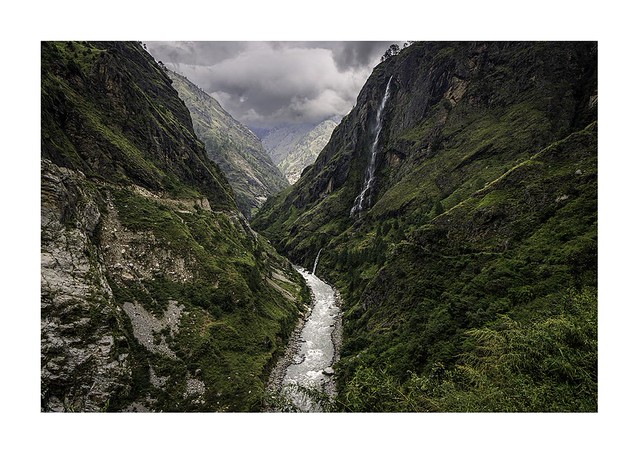
Most trekkers move through the Manaslu villages at the pace of their itinerary — breakfast, pack, walk, repeat. I understand it. I did the same thing for the first few days. Then my guide suggested I slow down in Samagaon, take the acclimatization day seriously, and actually look at where I was.
That extra day changed everything I understood about the trek.
The Villages of Upper Manaslu
The upper Manaslu valley contains some of the most intact Tibetan Buddhist communities outside Tibet. The main villages —Namrung, Lho, Samagaon, Samdo — each have distinct characters, but share the same cultural foundation.
Namrung (2,630m)
The first recognizably Tibetan village on the route. The architecture shifts here: white-washed stone walls, wooden window frames painted in deep reds and blues, rooftop mani stones. Rachen Gompa sits above the village on a rocky spur. The monastery is active and can be visited in the morning.
Lho (3,180m)
Famous for its unobstructed view of Manaslu's north face. The village is small but well-established, with a handful of tea houses and a community that has been here for many generations. The local school sits on the upper end of the village, and children often wave from the yard.
Samagaon (3,530m)
The largest upper-valley village and the hub of the route. This is where most trekkers spend an acclimatization day, and it is the right place to spend it. The village has a gompa at its center, a chorten at its entrance, and a daily rhythm that unfolds regardless of how many trekkers are passing through.
Samdo (3,860m)
The highest village, just a few kilometers from the Tibetan border. Smaller and more exposed, Samdo has a frontier quality. On clear days you can see across into Tibet. Yak herders camp nearby during the high-altitude grazing season.
What People Actually Do
The economy of upper Manaslu rests on three pillars: yak herding, agriculture, and increasingly, trekking tourism.
Yaks are everything above 3,500m. They carry loads, provide milk, butter, and meat, and their dung is dried and used for fuel — critical at altitudes where wood is scarce. Watching a yak caravan move along the trail, bells clanging, breath steaming, is one of those Manaslu images that stays with you.
Barley is the primary crop in the high valley — planted in spring, harvested before the first snows. Tsampa, roasted barley flour mixed with butter tea into a thick paste, is the traditional food that has sustained these communities for centuries. It is still eaten daily.
Morning in Samagaon
If you wake early and walk to the gompa before breakfast, you will find the same scene each morning: two or three elderly residents doing kora. They walk slowly, prayer beads in hand, lips moving silently. They have done this every morning for decades. They will continue after you have gone home and forgotten the altitude and remember only the view.
The Women of the Village
The women of upper Manaslu are the visible heart of village life. They wear the chuba — a long traditional robe, often dark blue or maroon — with a brightly colored apron at the waist. Heavy silver and turquoise jewelry. Their days begin before sunrise and end after dark, managing households, feeding animals, tending crops.
They are also the ones most likely to wave at you from a doorway or offer you tea at a tea house. Accept always.
Festivals Worth Knowing
| Festival | Time | What Happens | |---|---|---| | Lhosar | February/March | Tibetan New Year — feasting, dancing, new clothes, monastery ceremonies | | Saga Dawa | May/June | Holiest Buddhist month — full moon day especially sacred, no meat sold |
If your timing aligns with Lhosar, you may encounter village celebrations that are entirely local and entirely genuine — not staged for tourism.
A Note on Photographing Village Life
Village life in upper Manaslu is not a performance. The people going about their mornings — carrying water, spinning prayer wheels, carrying loads — are not doing it for your camera. Ask first, always. A smile and a questioning gesture usually gets a nod or a shake. Respect the answer either way.
The images you earn by asking are better than the ones you take without asking. Always.