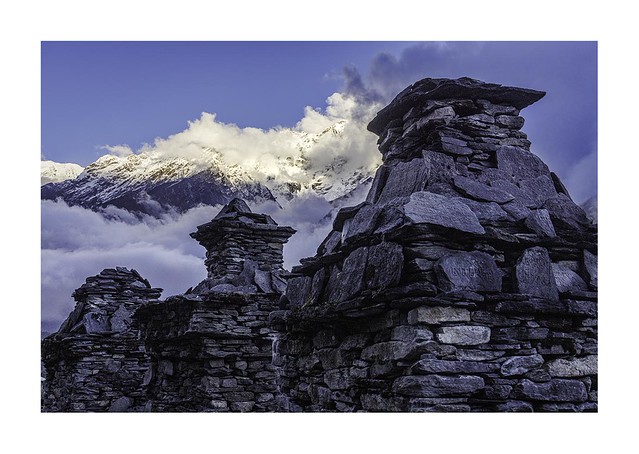
There is a point on the Manaslu Circuit where Nepal stops feeling like Nepal.
It happens gradually. The tropical heat of the lower gorge gives way to dry alpine air. Chorten (stone stupas) begin appearing on ridgelines. The sound of the river is replaced by wind and the distant clang of yak bells. By the time you reach Lho village at 3,180m, you are walking through a landscape that is culturally and spiritually Tibetan, even if the passport stamps say otherwise.
A Culture Carried Across the Mountains
The communities of upper Manaslu — Lho, Samagaon, Samdo — are Tibetan Buddhist villages. Many residents are descendants of Tibetan refugees who fled across the high passes after 1959. Others have lived in this valley for generations, maintaining cultural and trade connections with Tibet long before modern borders were drawn.
The result is a living culture that has preserved its identity through geography and faith. The high altitude and restricted access of the Manaslu Conservation Area have insulated these villages from the rapid change affecting much of Nepal.
The Language Shift
In lower villages like Soti Khola and Jagat, most people speak Nepali and the Gurung dialect is common. As you climb, you begin hearing the Tibetan dialect in conversations between locals — a different cadence entirely, with rolled consonants and tonal inflections that mark the cultural shift as clearly as the architecture.
What You See Every Day on Trail
Mani Walls
Long stone walls built from flat rocks, each carved with the mantra Om Mani Padme Hum. These walls can stretch for hundreds of meters. The tradition: always pass them on the left. This keeps the sacred object on your right, in the place of honor.
Prayer Flags
Lungta — the colorful rectangular flags strung between passes, ridgelines, and rooftops. Each color represents an element: blue (sky/space), white (air/wind), red (fire), green (water), yellow (earth). As the flags weather and the printed mantras fade, the prayers are believed to be carried into the world by the wind.
Chortens and Gompas
Every village has at least one chorten (a dome-shaped reliquary monument). The major monasteries — Rachen Gompa near Namrung, Pungyen Gompa above Samagaon — are centers of community life, not tourist sites. Monks live and study in them year-round.
Pungyen Gompa: Worth Every Step
The hike to Pungyen Gompa takes about 90 minutes from Samagaon and climbs above the village onto a ridge overlooking Manaslu Glacier. The monastery itself is ancient and beautifully maintained. Inside, butter lamps burn in front of golden Buddhas. The walls are painted with intricate mandalas. Outside, the mountain fills the entire horizon.
I arrived during the morning prayer session. The low drone of chanting filled the courtyard. I sat outside and listened without understanding the words and felt completely at peace.
Daily Life and Tradition
| Tradition | Detail | |---|---| | Tsampa | Roasted barley flour — eaten daily, mixed with butter tea | | Chuba | Traditional long robe worn by women, often with colorful apron | | Yak herding | Central to the mountain economy above 3,500m | | Kora | Circumambulation around monasteries and mani walls — clockwise | | Prayer wheels | Spin clockwise; contains rolled mantras inside |
How to Be a Respectful Guest
- Always ask before photographing people. A smile and a gesture goes a long way; a nod of agreement means yes.
- Remove your shoes before entering any gompa or home.
- Accept tea when offered. Refusing hospitality in these communities is considered impolite.
- Dress modestly in monasteries. Shoulders and knees covered.
- Do not touch sacred objects such as mani stones, butter lamp offerings, or ritual items.
The culture of upper Manaslu is not a backdrop. It is the living inheritance of people who have kept their world intact under extraordinary pressure. Walk through it with attention and gratitude.