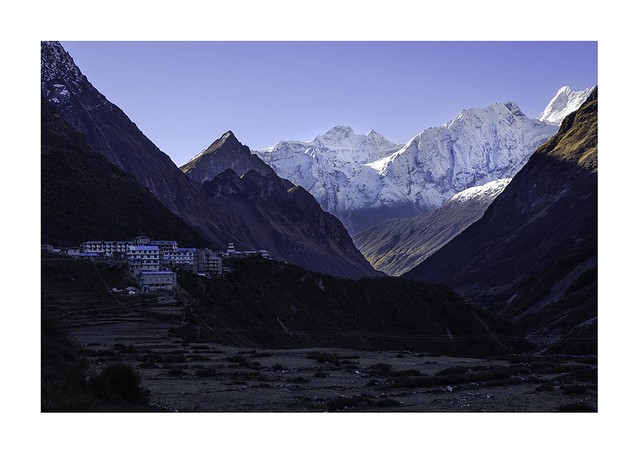
The standard Manaslu Circuit from Soti Khola to Dharapani is a complete and rewarding route on its own. But it also serves as the spine for several significant detours and extensions that can add days, elevation, and cultural depth to your experience. If you have extra time, budget, or specific interests, these alternatives are worth serious consideration.
Tsum Valley Extension
The Tsum Valley is the most popular and significant detour from the main Manaslu Circuit. Branching off near Lokpa and Chhekampar, the route enters a hidden valley that was only opened to trekkers in 2008 — one of the last areas in Nepal to become accessible to visitors.
What Makes Tsum Valley Special
Tsum Valley is a sacred Himalayan pilgrimage site. The valley's residents — Tsumbas — follow a form of Tibetan Buddhism that has been isolated for centuries, producing a cultural environment unlike anywhere else in Nepal. Nile Gompa, Mu Gompa, and Milarepa's Caves are among the sacred sites accessible within the valley. Ancient mani walls, chortens, and prayer flag arrays line the trails.
The valley sits in a restricted area requiring a separate Tsum Valley permit on top of the Manaslu MRAP.
Route and Duration
| Segment | Distance | Days | |---|---|---| | Lokpa junction → Chhekampar | ~25 km | 2–3 days | | Chhekampar → Nile/Mu Gompa | ~30 km | 2–3 days | | Return to main circuit | ~55 km | 4–5 days | | Total addition | ~7–10 days | |
The Tsum Valley loop reconnects with the main Manaslu circuit, so you do not retrace your steps entirely. Trekkers who include Tsum Valley typically budget 24–26 days for the combined trip.
Permit Requirements
- Manaslu Restricted Area Permit (MRAP): USD 100/week for Sept–Nov, USD 75/week for other months
- Tsum Valley Restricted Area Permit: USD 40 for first week, USD 7 per day thereafter
- Both are obtained through a licensed trekking agency in Kathmandu
Manaslu Base Camp Approach
Manaslu Base Camp (4,800m+) is accessible from Samagaon via a side trail that follows the Buri Gandaki river toward the mountain's south face. This is not a fully developed public trekking route — it crosses glacial terrain and approaches active mountaineering zones.
Realistic Expectations
The approach from Samagaon to the lower base camp area takes 3–5 hours depending on conditions and the specific point you aim for. The trail becomes increasingly undefined above 4,000m and crosses glacial moraine. Without mountaineering experience or specialized guidance, most trekkers stop at a viewpoint between 4,000m and 4,200m.
This side trip requires:
- A rest day built into your Samagaon acclimatization schedule
- Your guide's knowledge of current route conditions (glacial terrain changes season to season)
- Clear weather — the approach is not safe in low visibility
The return is the same trail, so it adds only one day to your overall circuit if done during the Samagaon acclimatization stop.
Annapurna Circuit Connection
The Manaslu Circuit ends at Dharapani (1,860m), which sits at the western entry point to the Annapurna Circuit. Trekkers who want to complete both circuits in a single expedition can walk directly from Dharapani onto the Annapurna route heading east toward Chame, Manang, and Thorong La (5,416m).
Combined Circuit Considerations
| Factor | Detail | |---|---| | Combined distance | ~340–360 km | | Combined duration | 28–36 days | | Additional permits | ACAP (already required for Manaslu), TIMS | | Highest point | Thorong La, 5,416m |
The transition at Dharapani is seamless from a trail perspective — you simply continue on the main trail heading east. Logistically, you will need to resupply food funds (teahouse meals and snacks become more expensive as you move deeper into the Annapurna Conservation Area).
One consideration: after 14–18 days on the Manaslu Circuit, your legs and lungs are well-conditioned for the Annapurna route. The combined trip is ambitious but very achievable for fit trekkers.
Shortcut Variations on the Main Circuit
Several local paths exist between villages that are shorter than the main marked trail. These are generally known to guides and local residents but not marked on standard trekking maps.
Common Shortcut Zones
Lower gorge shortcuts (Tatopani to Jagat): In high water season, some river sections require detours that the standard trail avoids. In dry season, shorter riverside paths may be passable.
Upper valley cross-routes (Lho to Shyala to Samagaon): Some guides know direct paths between adjacent villages that shave 30–60 minutes off standard itinerary times. These paths are narrow and require local knowledge to follow safely.
Descent variations (Bimtang to Dharapani): Below Bimtang, two or three different trail lines exist depending on the season and recent trail maintenance. A knowledgeable guide will choose the current best option.
Important Note
None of these shortcuts are recommended without a guide who knows the specific section. The "shortcut" designation sometimes means an unmaintained path that saves time but requires more technical scrambling. On a multi-week expedition, the time savings are often modest — the main trail exists because it works.
Planning Your Extended Route
If you are considering any extension beyond the standard circuit, plan your total days carefully before booking:
- Tsum Valley adds 7–10 days
- Manaslu Base Camp adds 0–1 days (done during acclimatization)
- Annapurna Circuit continuation adds 12–18 days
- Combined Manaslu + Tsum + Annapurna: 30–40 days minimum
Permit costs, guide fees, and teahouse expenses multiply with each additional day, so budget planning is as important as route planning.